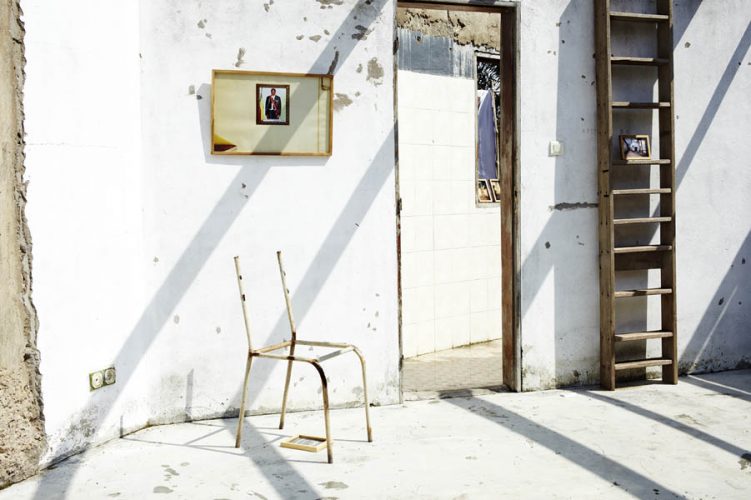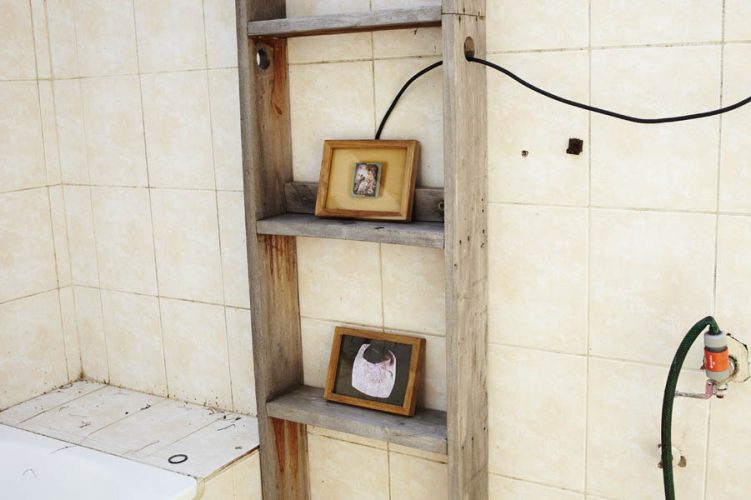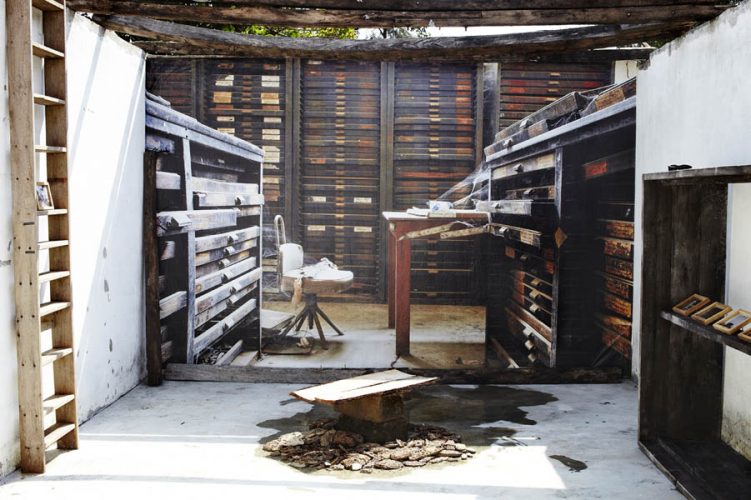



Imprimerie Nationale
Porto Novo, Benin, 2012
Identités / Identities, Marc Aufraise, p 10, New Africa, Kulte Editions, 2014
L’objet ou la trace de l’histoire
(…) La poésie se mêle aussi au travail documentaire du franco-ivoirien François-Xavier Gbré. L’esthétique des photographies de l’ancienne Imprimerie Nationale de Porto-Novo (Bénin, 2012) convoque les précurseurs Walker Evans ou Stephen Shore. Les images témoignent de la quiétude d’un regard qui cherche à capturer des traces d’histoire. Laisser à l’abandon le lieu destiné à diffuser l’écrit officiel est un symbole politique fort. Le photographe le souligne grâce à sa faculté à saisir la présence humaine, alors même qu’aucun être n’est visible : ce sont des hommes qui travaillaient ici, qui exécutaient les commandes ; ce sont des hommes qui ont aménagé un coin de repos, posé un cendrier sur une table basse et amené une chaise, face au soleil.
The object or the trace of history
(…) Poetry also appears in the documentary work of the French-Ivorian François-Xavier Gbré. The aesthetic of photographs of the former Porto-Novo National Press (Benin, 2012) recalls Walker Evans or Stephen Shore. Images testify to the quietness of a look that seeks to capture traces of history. Abandoning a site destined for diffusing the official word is a strong political symbol. The photographer emphasizes this thanks to his ability to grasp human presence, even when none is visible: the men who work here, who fills orders; the men who put the chairs back, covered the machines; the men who set up a break area, put an ashtray on a low table, and set up a chair facing the sun.
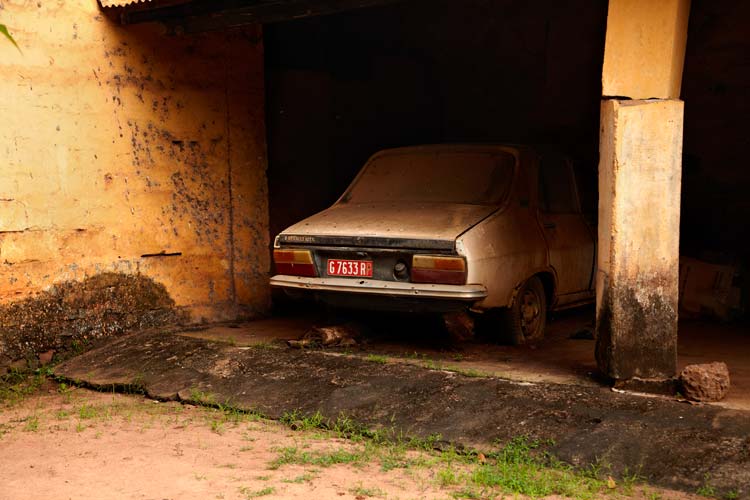
Renault 12, Imprimerie Nationale, Porto Novo, 2012
« Le 2 août 2012, je visite l’imprimerie nationale à Porto Novo pour la première fois. Sur le parking, une vieille Renault 12 hors d’usage est garée sous le porche qui menace de s’effondrer. Lentement nous pénétrons dans une belle construction de style Bauhaus inaugurée en 1924, la bâtisse est quelque peu défraichie aujourd’hui. Une lumière douce filtrant à travers le toit éventré par les intempéries illumine les anciennes machines. La pièce a des airs de théâtre. Ici, les muscles d’acier ont longtemps frappé le papier. À présent, les gravats craquent sous les pas, l’abandon et l’oubli ont un parfum de poussière. Pourtant, le Journal officiel valide actes administratifs, décrets, tracés territoriaux, communiqués des conseils des ministres, textes de loi, etc. Constatant le délabrement actuel de l’imprimerie, on est en droit de se demander si ces documents sont une priorité de l’État. Il en va de devenir de la nation béninoise et de ses générations futures.»
“On August 2, 2012, I visited the National Printing Office in Porto Novo for the first time. In the parking lot, an old, out-of-service Renault 12 was parked under a porch that looked as if it might collapse at any moment. Slowly, we enter a beautiful Bauhaus-style building inaugurated in 1924; the structure is somewhat weathered today. Soft light filtering through the roof, torn open by the elements, illuminates the old machines. The room has the air of a theater. Here, steel machinery once pounded the paper for years. Now, rubble crunches underfoot; abandonment and neglect carry the scent of dust. Yet the Official Gazette validates administrative acts, decrees, territorial boundaries, communiqués from the Council of Ministers, legal texts, and more. Given the current state of disrepair of the printing press, one is justified in wondering whether these documents are a priority for the State. The future of the Beninese nation and its future generations is at stake.”
François-Xavier Gbré, Porto-Novo, Benin, 2012.
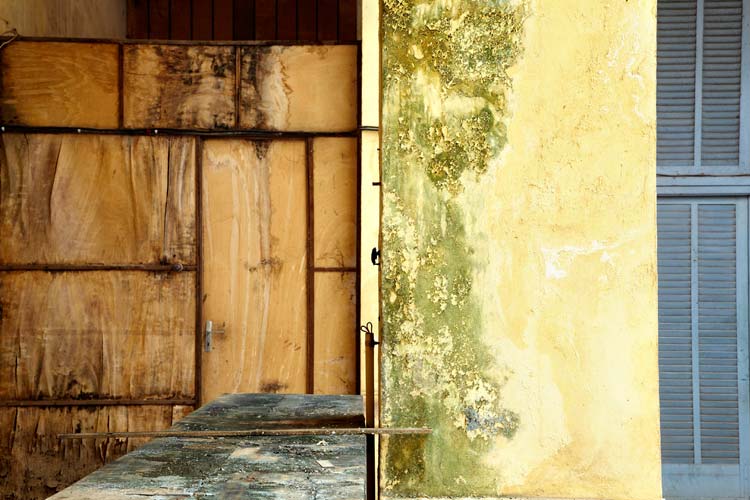
Hall, Imprimerie Nationale, Porto Novo, 2012
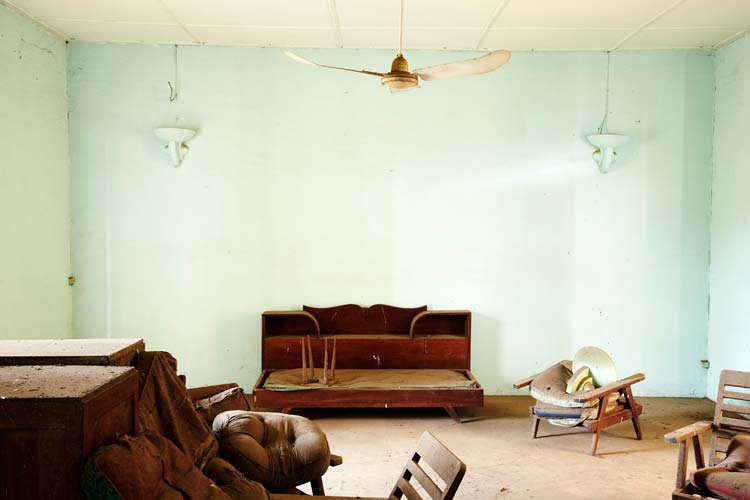
Appartement du directeur, Imprimerie Nationale, Porto Novo, 2012
Inkjet print
100 x 150 cm
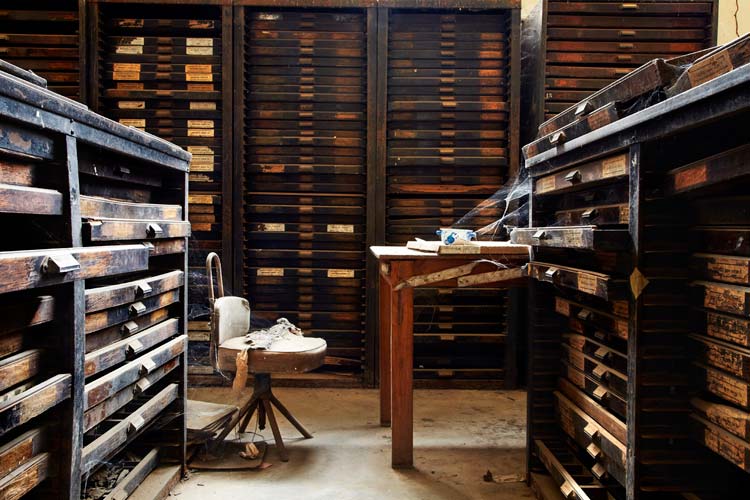
Atelier de typographie I, Imprimerie Nationale, Porto Novo, 2012
Inkjet print
100 x 150 cm
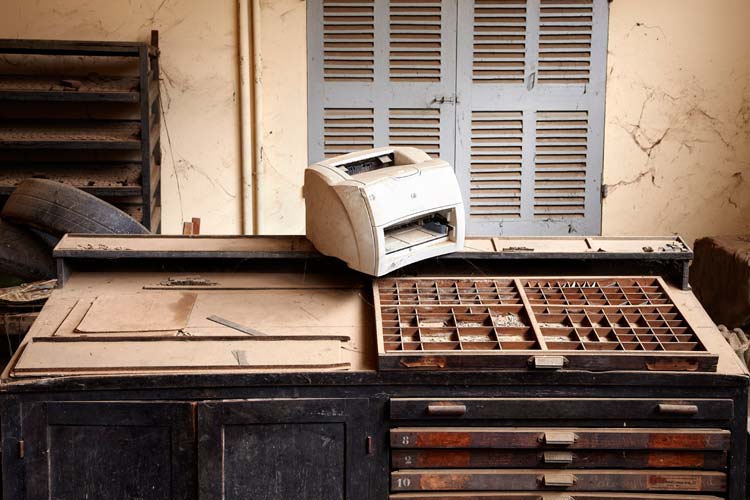
Atelier de typographie II, Imprimerie Nationale, Porto Novo, 2012
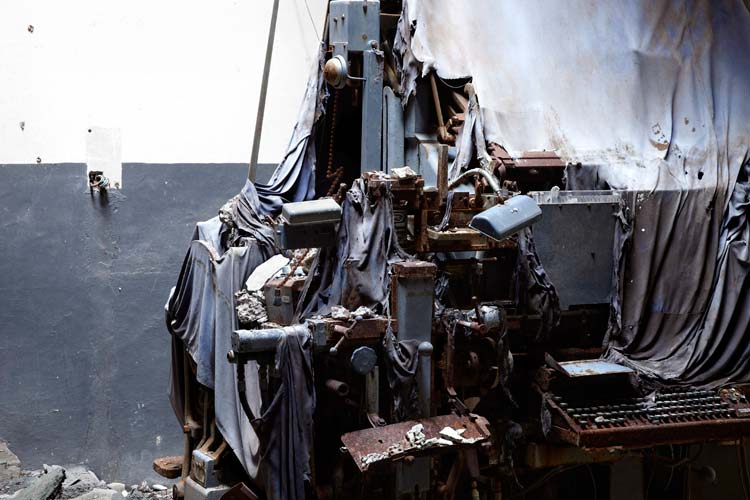
Logotype I, Imprimerie Nationale, Porto Novo, 2012
Inkjet print
100 x 150 cm
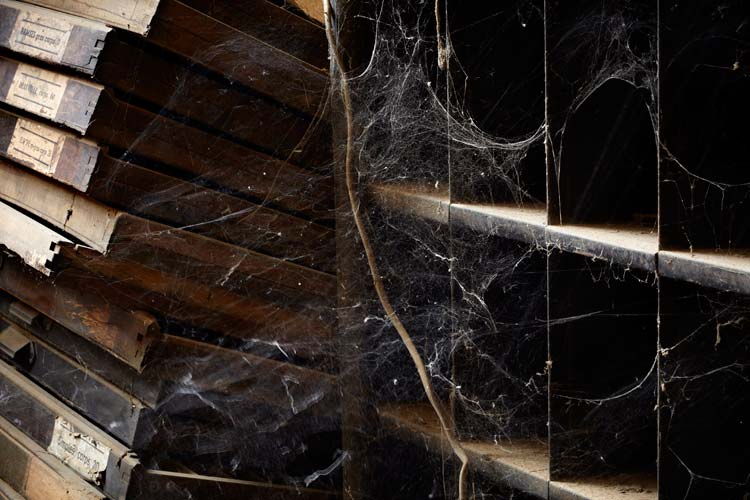
Atelier de typographie III, Imprimerie Nationale, Porto Novo, 2012
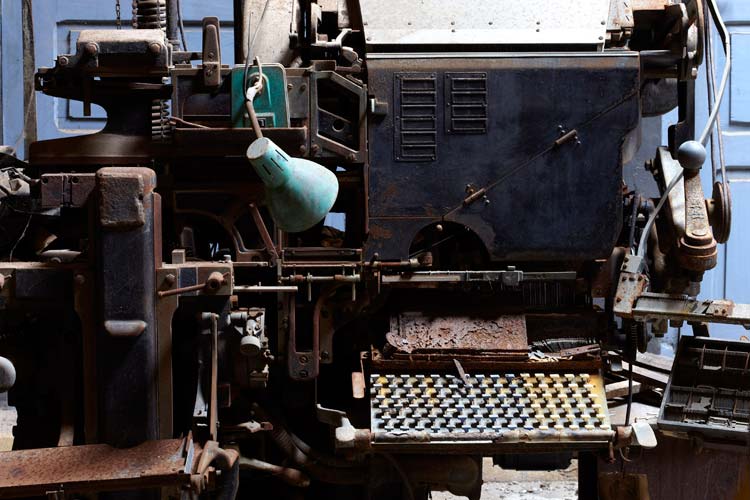
Logotype II, Imprimerie Nationale, Porto Novo, 2012
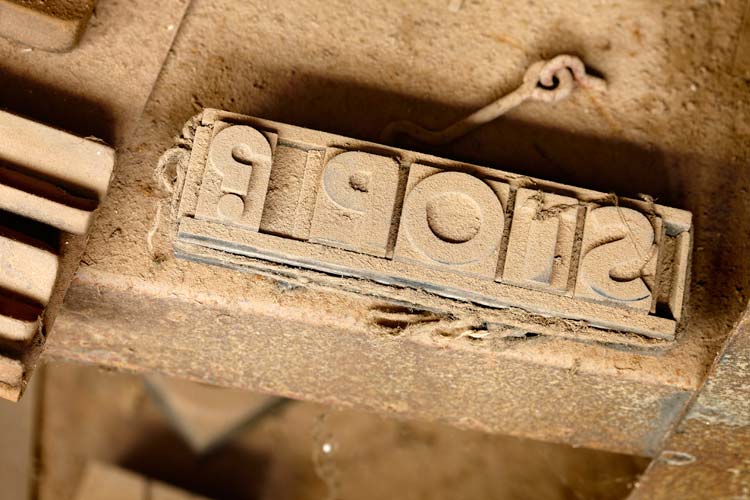
Stop?, Imprimerie Nationale, Porto Novo, 2012
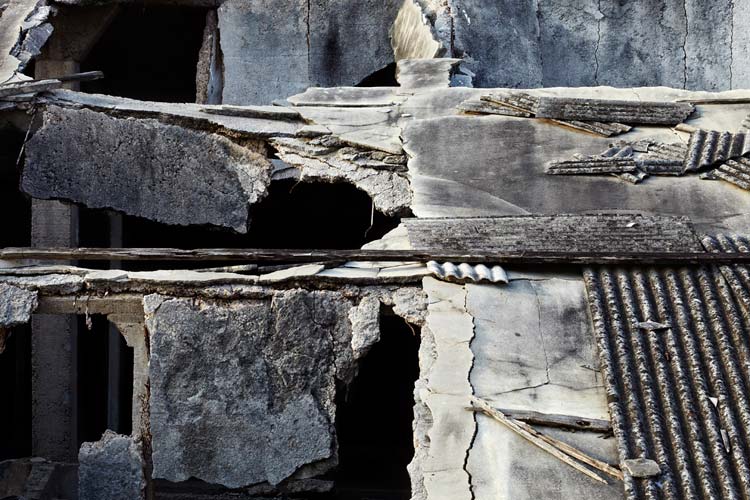
Toiture, Imprimerie Nationale, Porto Novo, 2012
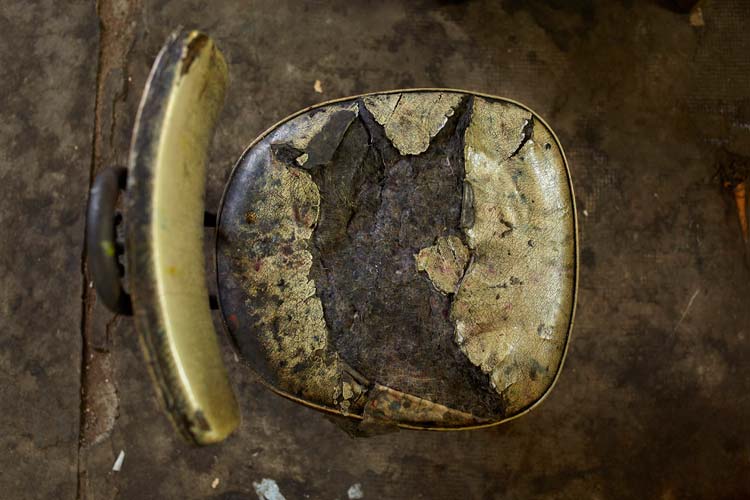
Hall II, Imprimerie Nationale, Porto Novo, 2012
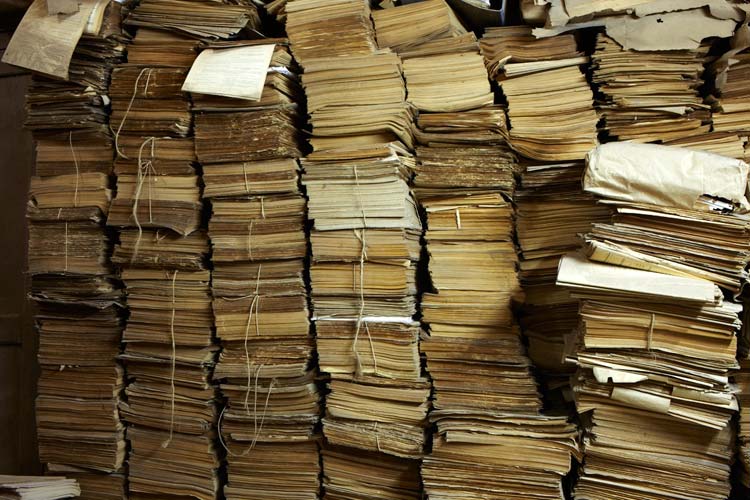
Archives III, Imprimerie Nationale, Porto Novo, 2012
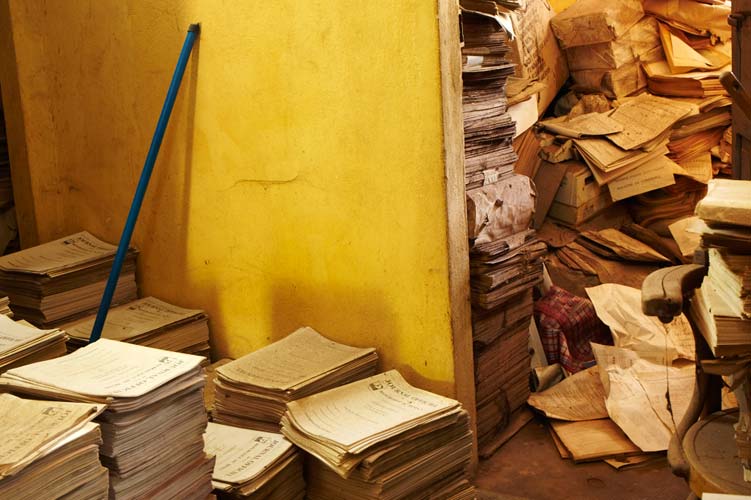
Archives I, Imprimerie Nationale, Porto Novo, 2012
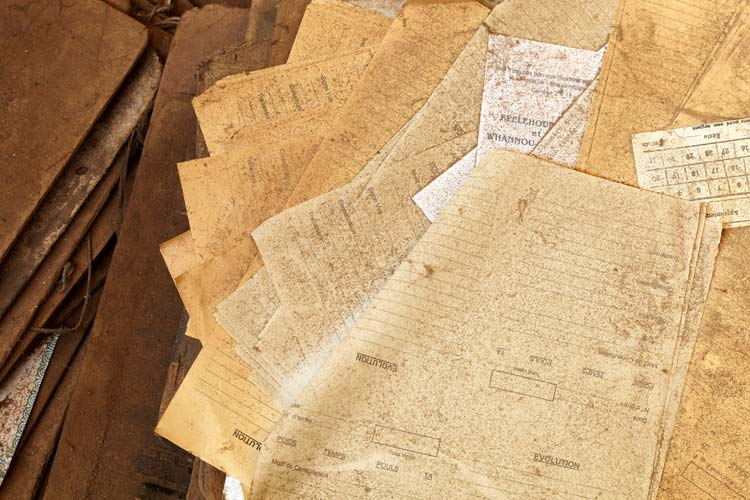
Atelier de typographie IV, Imprimerie Nationale, Porto Novo, 2012
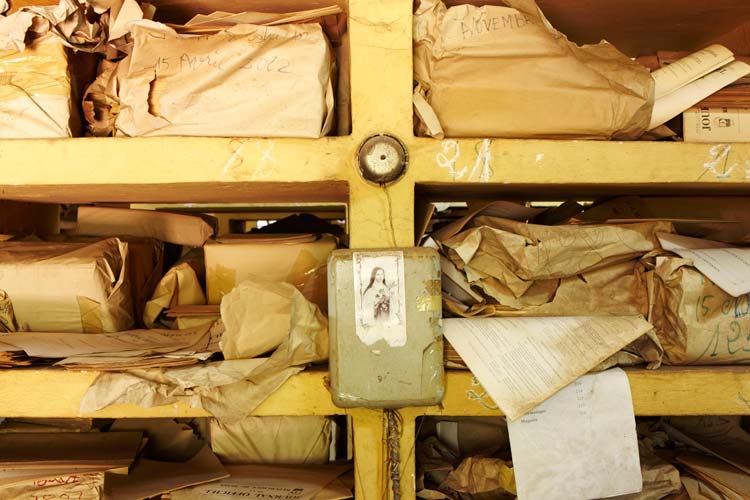
Archives I, Imprimerie Nationale, Porto Novo, 2012
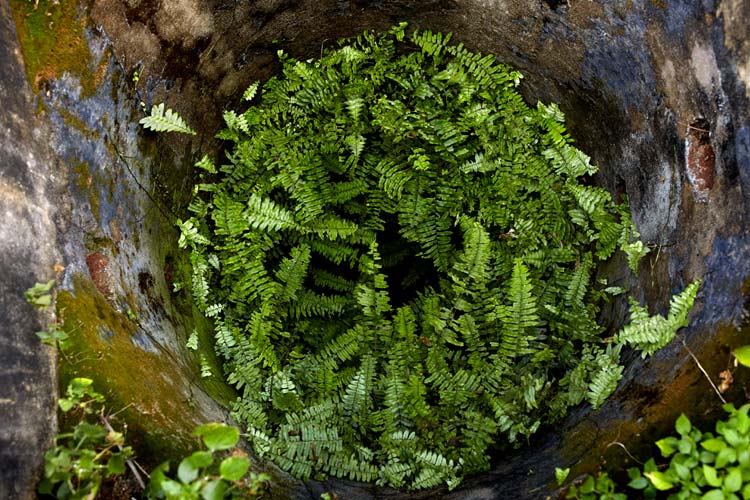
Puit, Imprimerie Nationale, Porto Novo, 2012
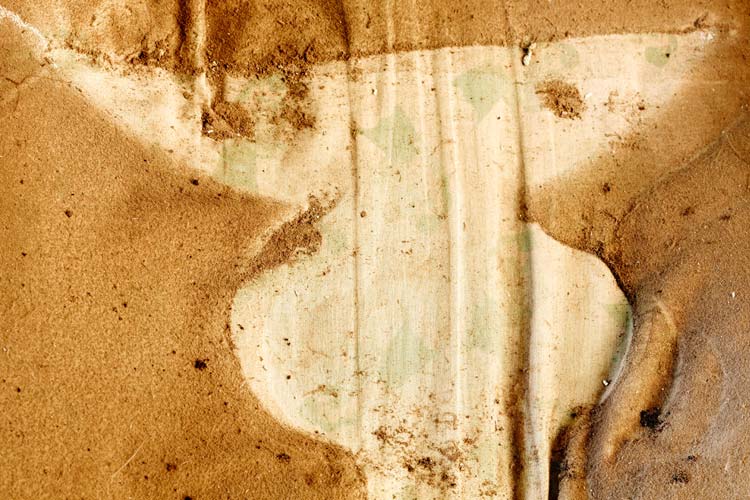
Appartement du directeur III, Imprimerie Nationale, Porto Novo, 2012
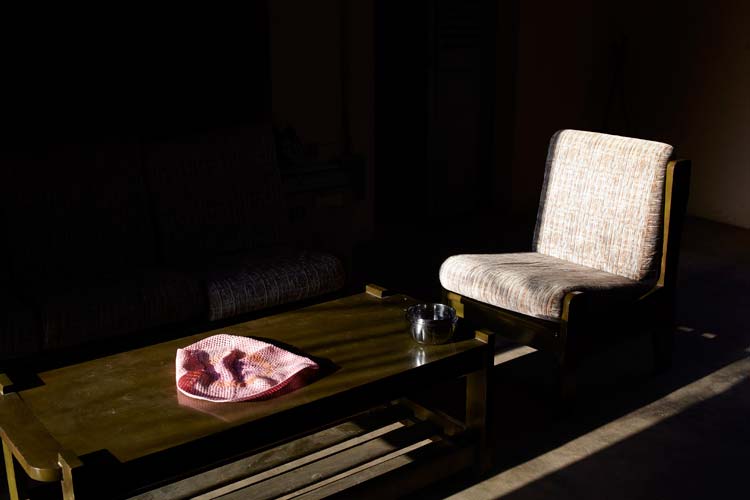
Salle d’attente, Imprimerie Nationale, Porto Novo, 2012
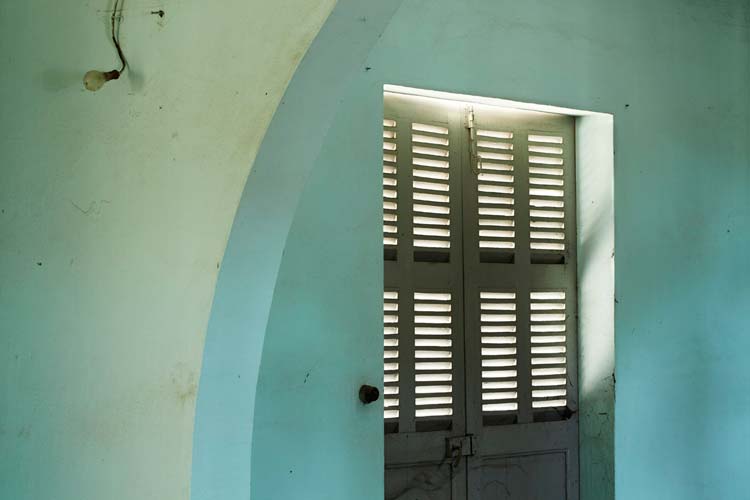
Appartement du directeur II, Imprimerie Nationale, Porto Novo, 2012
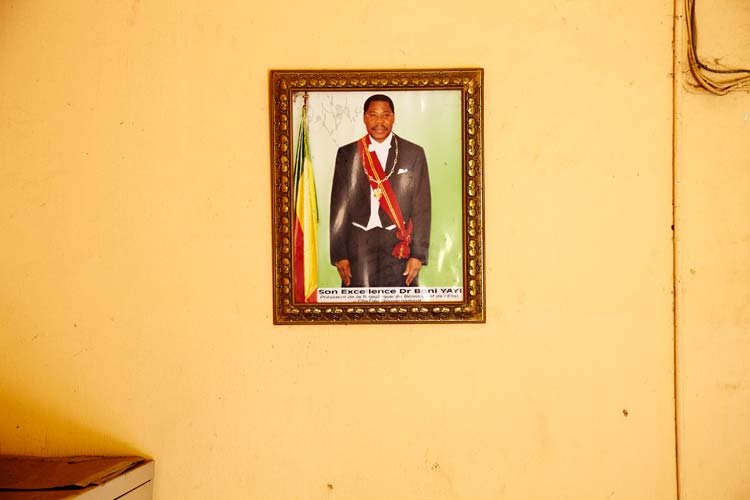
Thomas Boni Yayi, Président de la République du Bénin, Imprimerie Nationale, Porto Novo, 2012
Installation views, Biennale Regard Bénin, Cotonou, 2012